The 2007 Quarter Value Guide: What's Yours Worth?

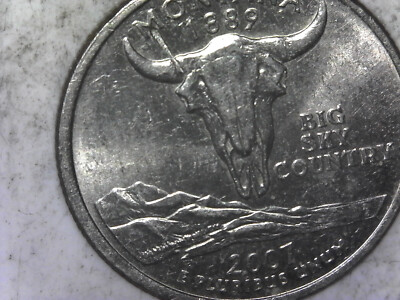
A 2007-D Montana quarter struck on the wrong planchet sold for $9,600 at Heritage Auctions. High-grade gems regularly bring $100–$2,000+. Most circulated examples are worth face value — but the right variety in the right grade can change everything.

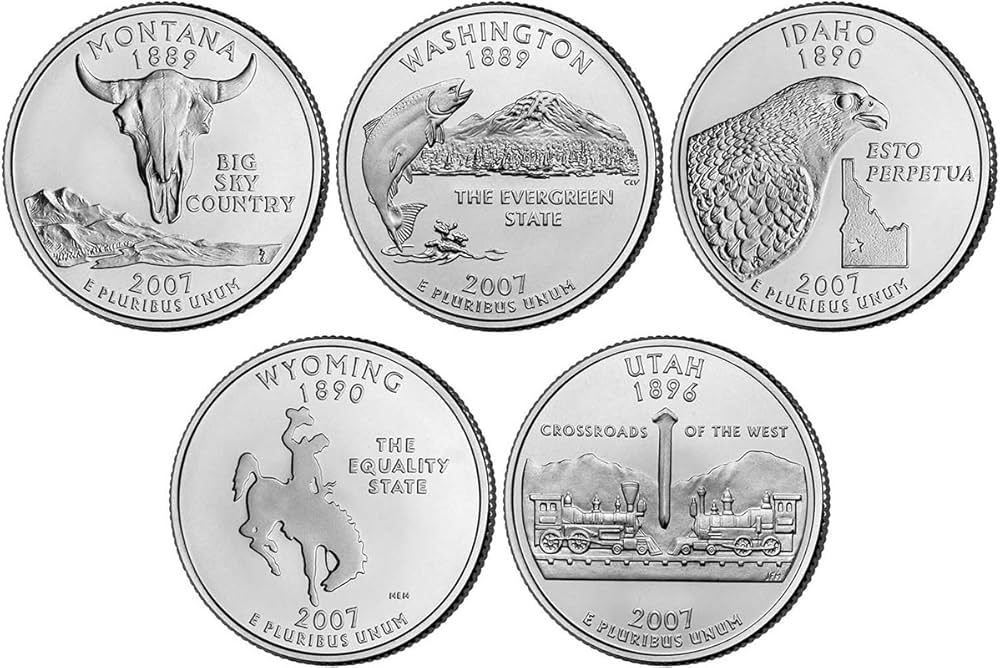
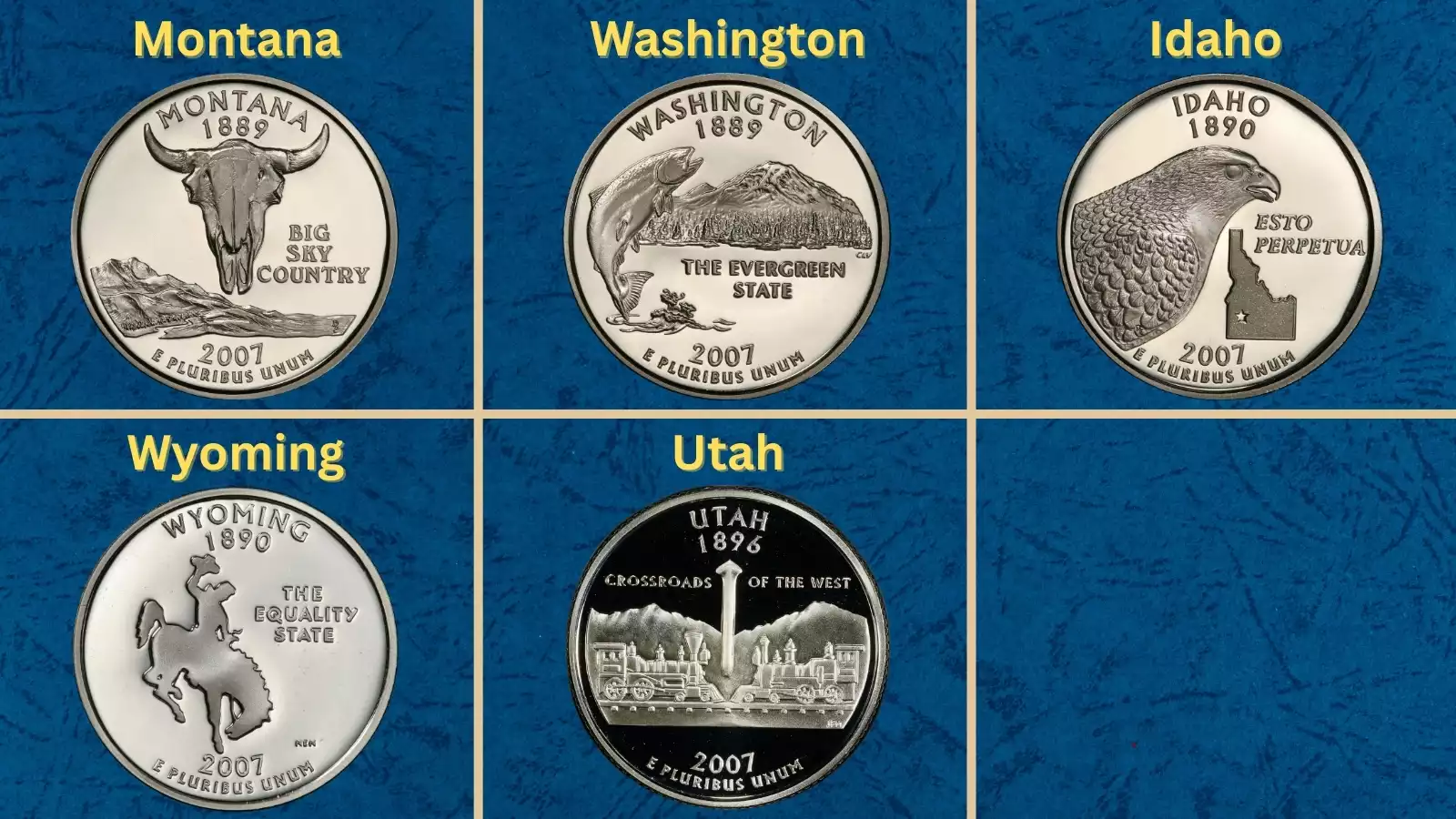
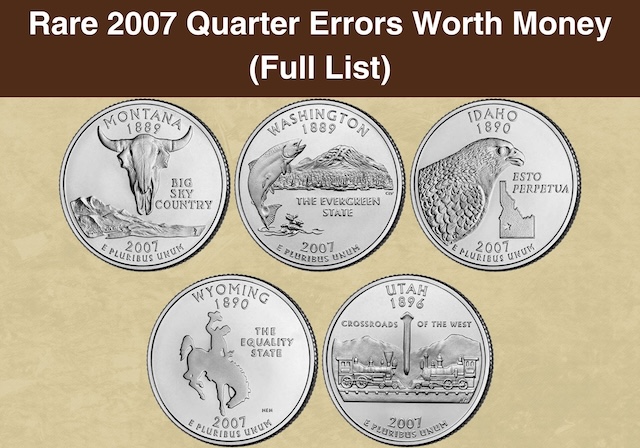
This guide covers all five 2007 state designs (Montana, Washington, Idaho, Wyoming, Utah), every mint mark, and the error varieties worth watching for.

★★★★★ 4.8 / 5  ·  Rated by 1,842 collectors
Check My 2007 Quarter Value →
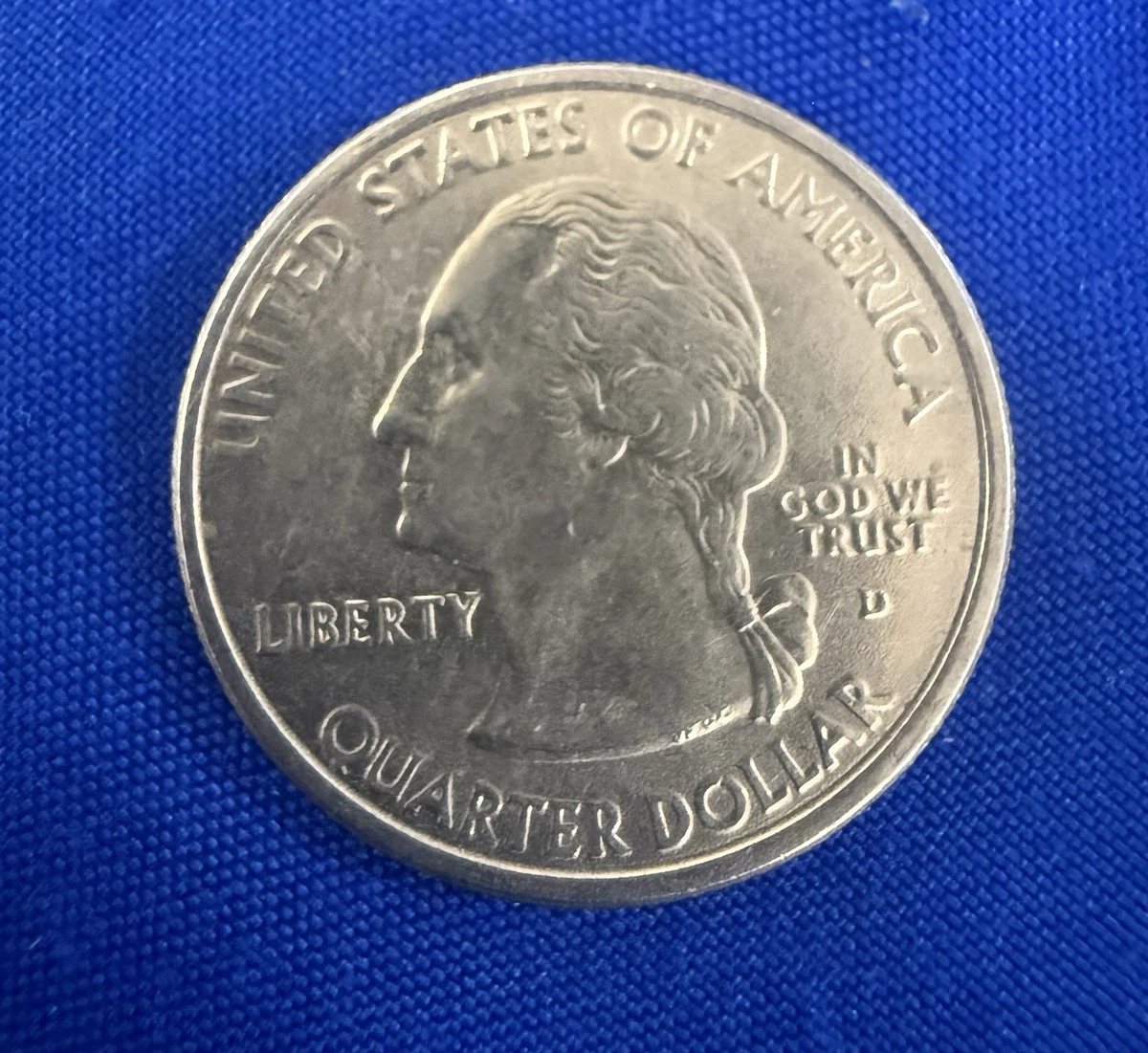
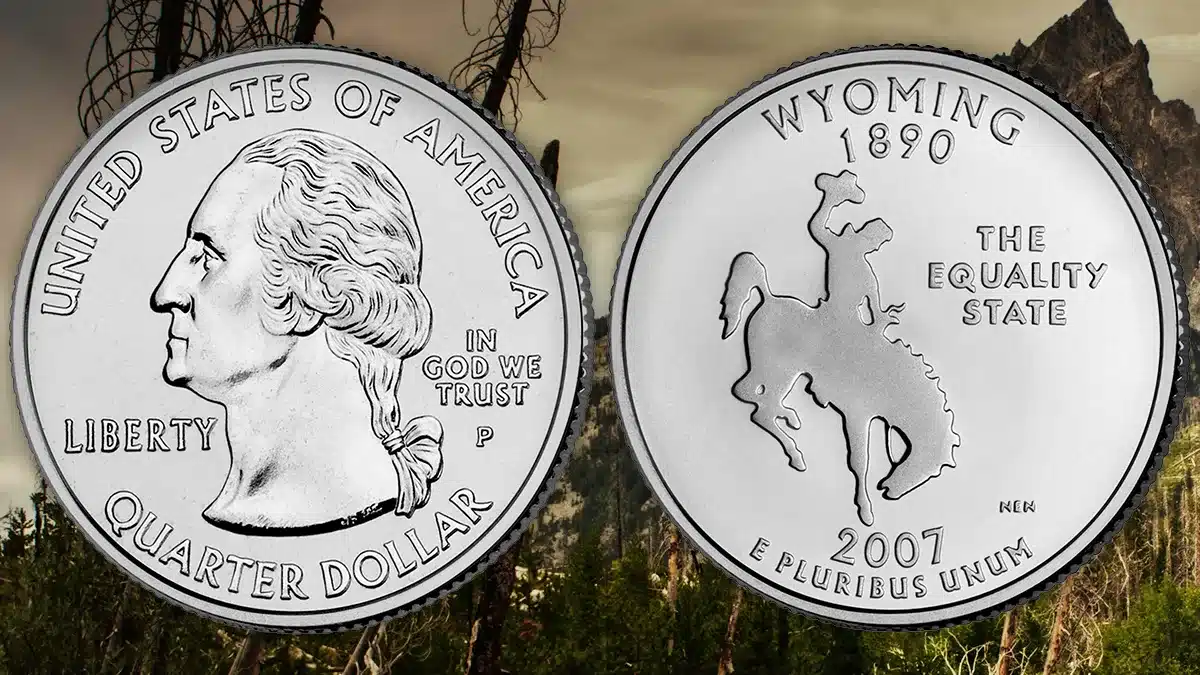
2007 State Quarter obverse and reverse showing Washington portrait and state design
$9,600 Top Auction Sale (Heritage)
2.71B Total 2007 Quarters Minted
5 State Designs Released
9+ Known Error Varieties

2007 Quarter Value Chart at a Glance

Values below reflect the current market across all five 2007 state quarter designs and the four major strike types. For a deeper dive into identifying your specific coin, the complete 2007 quarter identification walkthrough and reference guide offers detailed photo comparisons by grade. The Wyoming design commands the highest premiums in gem grades; the Montana and Washington quarters lead among error coins.

Design / Variety Mint Worn (G–VF) AU / Circ. MS-65 Unc. MS-67+ Gem
Montana P $0.25 $0.70–$1 ~$5 $40–$160
Montana D $0.25 $0.70–$1 ~$24 $80–$320
Washington (State) P $0.25 $0.70–$1 ~$5 $35–$2,070
Washington (State) D $0.25 $0.70–$1 ~$5 $40–$2,760
Idaho P $0.25 $0.70–$1 ~$5 $37–$120
Idaho D $0.25 $0.70–$1 ~$5 $40–$200
Wyoming ★ (Signature) P $0.25 $0.70–$1 ~$5–$7 $29–$2,115
Wyoming ★ D $0.25 $0.70–$1 ~$4–$5 $33–$1,225
Utah P $0.25 $0.70–$1 ~$6 $32–$120
Utah D $0.25 $0.70–$1 ~$7.50 $15–$870
Any design (S Clad Proof) S $4–$25 $25–$100
Any design (S Silver Proof) 🔴 S $14–$36 $36–$260
Satin Finish (Mint Set) P or D SP-67: $15–$20 SP-69: $59–$255

★ Wyoming row highlighted gold = signature design; 🔴 Silver Proof row highlighted red = rarest regular issue. Values based on PCGS/NGC auction data and market guides, 2026 edition.

🪙 CoinHix is a handy on-the-go tool for quickly cross-referencing your 2007 quarter's design and grade against current market estimates — a coin identifier and value app.

Jump to Any Section

The Valuable 2007 Quarter Errors (Complete Guide)

The 2007 50 State Quarters were produced in enormous numbers, but that volume also created conditions for a variety of dramatic minting errors. The most valuable specimens involve planchet problems, die failures, and mechanical malfunctions that escaped quality control. Each error below is documented with visual identification clues and known market values.

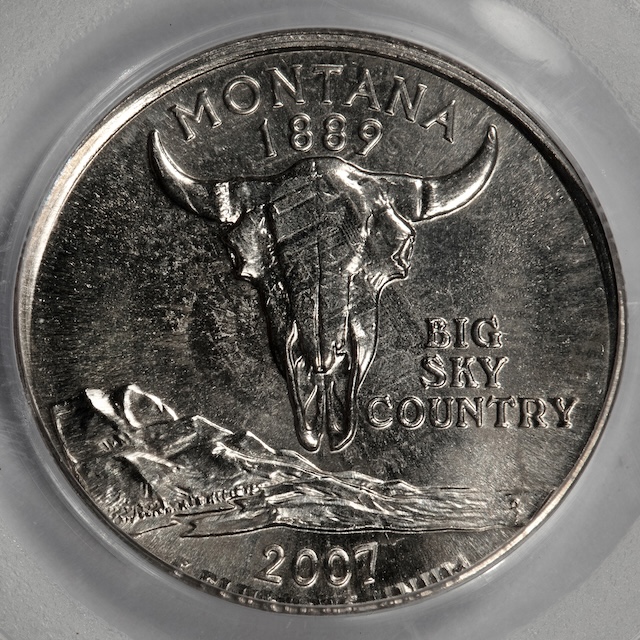
2007-D Montana quarter double denomination error struck on nickel planchet

Double Denomination Error — Montana Quarter Struck on Nickel Die

MOST VALUABLE   $1,250 – $9,600+

The double denomination error is one of the rarest and most dramatic failures possible at the U.S. Mint. It occurs when a planchet intended for one denomination is fed into the press for another — in this case, a nickel-format die striking a quarter-design planchet, or vice versa. The 2007-D Montana is the most publicized example from the series.

On the affected coin, you will notice a mismatch between the planchet's physical dimensions and the die's intended design field. The coin may appear smaller or have different edge characteristics than a standard quarter, with Jefferson's portrait visible alongside the Montana state design on the reverse — a jarring juxtaposition that immediately signals a major error.

Collectors prize these coins for their rarity and the sheer improbability of their creation. A 2007-D Montana double denomination example in MS-65 condition sold for approximately $9,600 at Heritage Auctions, confirming this as the top error in the 2007 series. Certification by PCGS or NGC is essential to authenticate the error and maximize resale value.

How to spot it

Weigh the coin on a jeweler's scale — a standard quarter is 5.67g; a double denomination will deviate significantly. Check the edge for nickel-type reeding and look for obverse design elements inconsistent with the quarter die. A 10× loupe will reveal the mismatch in design fields.

Mint mark

D (Denver) — the most documented 2007 double denomination examples are D-mint Montana quarters.

Notable

A 2007-D Montana double denomination in MS-65 sold for $9,600 at Heritage Auctions (August 2024). PCGS designates confirmed double-denomination errors with their own population numbers; census counts are extremely low, often single digits, for each confirmed example.

2007-P Montana quarter partial tilted collar error showing stepped rim effect

Partial Tilted Collar Error — Montana Quarter

MOST FAMOUS   $725 – $1,500+

The partial tilted collar error occurs when the collar die — the ring that surrounds the planchet during striking to form the coin's edge — is not fully deployed or is canted at an angle. When the hammer die strikes, the unsupported portion of the planchet squirts outward, creating a distinctive stair-step or terraced effect along part of the coin's rim. The error is most visible from the edge view.

On 2007-P Montana quarters bearing this error, one section of the rim will show the normal reeded edge giving way to a series of horizontal steps or a raised shelf — the telltale diagnostic of a tilted collar strike. The obverse and reverse designs remain largely intact, but the coin's profile is noticeably asymmetric. The degree of tilt determines how dramatic the error appears.

Because the collar controls edge formation, tilted collar errors affect the coin's geometry in ways that are immediately apparent to an experienced collector. A 2007-P Montana quarter in MS-65 with this error sold for $725, making it among the more accessible major errors in the 2007 series while still commanding a strong premium over a common example.

How to spot it

Examine the edge of the coin — look for stepped horizontal bands or a shelf-like protrusion on one section of the rim. The rest of the rim should appear normal. Viewing the coin from the side under a bright light makes the terracing effect unmistakable. The feature is visible to the naked eye on significant examples.

Mint mark

P (Philadelphia) — documented on 2007-P Montana quarters; may also occur on other P-mint designs from this year.

Notable

A 2007-P Montana quarter with partial tilted collar in MS-65 sold for $725. Multiple sources confirm this sale. CONECA and PCGS both recognize tilted collar errors as a distinct, attributable variety class; examples must show clear step definition to merit the designation rather than a simple broadstrike attribution.

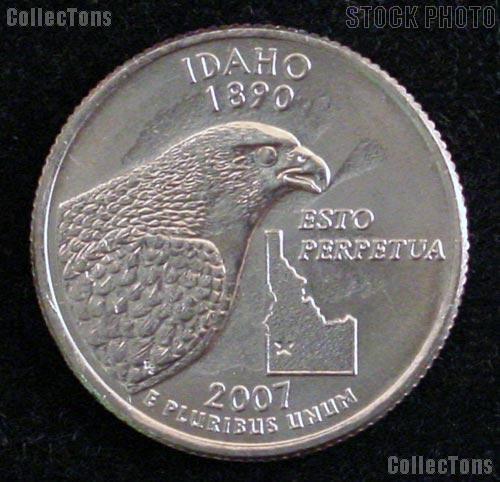
2007-P Idaho quarter lamination bubbling error showing clad layer separation

Lamination Bubbling Error — Idaho Quarter

RAREST SURFACE ERROR   $915 – $2,000+

Lamination errors arise from impurities or gas pockets trapped within the planchet's clad layers during metal fabrication. These inclusions weaken the bond between the outer copper-nickel clad layer and the pure copper core beneath. When the die strikes the planchet at high pressure, the weakened areas blister, bubble, or delaminate — sometimes popping open like a blister to reveal the copper interior beneath the nickel surface.

On the 2007-P Idaho quarter examples displaying this error, affected areas show raised bubbles or fractured, flaking sections of the obverse or reverse surface. In severe cases, entire sections of the clad layer peel away after striking, exposing a contrasting copper-orange zone. Lamination errors occurring across the design's primary field — Washington's portrait or the Idaho peregrine falcon — are the most visually striking and most sought-after.

A documented 2007-P Idaho quarter in MS-64 with prominent lamination bubbling sold for $915 in 2021. The error is a pre-mint planchet defect, making every example unique in the size and location of the delaminated zone. PCGS and NGC both attribute lamination errors under their error coin designation system, and specimens with significant affected areas earn the highest premiums.
How to spot it

Look for raised blisters, craters, or peeled flaps of metal on the coin's surface — distinct from post-mint damage because the edges of the delamination are typically smooth and the copper core beneath is undamaged. A 10× loupe helps distinguish lamination errors from scratches or corrosion, which have different surface textures.

Mint mark

P (Philadelphia) — primary documented source; lamination defects can arise at any mint when planchet stock carries impurities.

Notable

The 2007-P Idaho MS-64 lamination example sold for $915 in 2021. Lamination errors from the 50 State Quarters series are generally scarcer than die errors because they stem from planchet defects that rarely escape the Mint's incoming metal quality controls. Idaho examples are among the most cited in specialist literature.

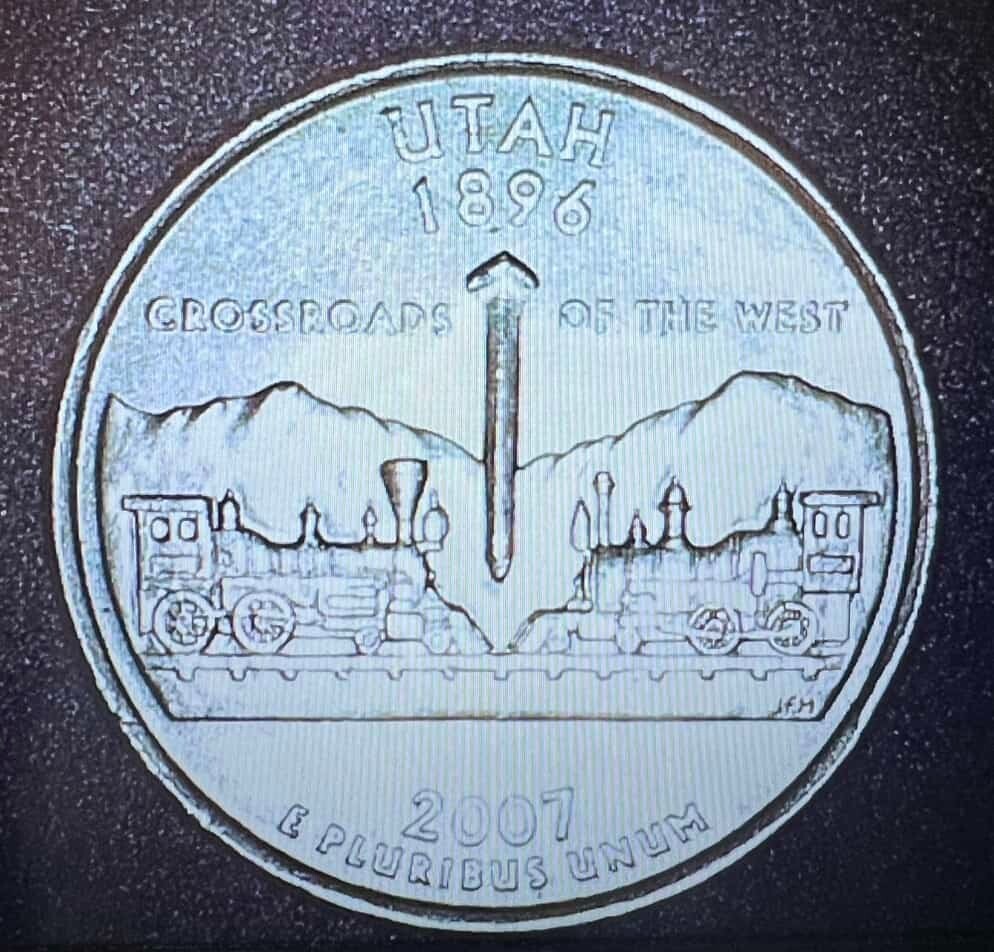
2007-D Utah quarter die chip error showing raised metal bump on coin surface

Die Chip Error — Utah Quarter

BEST KEPT SECRET   $200 – $1,035+

Die chip errors occur when small fragments break away from the working die during production, leaving a void in the die face. When the die subsequently strikes a planchet, metal flows into that void and creates a small raised lump or blob on the finished coin's surface. Unlike die cracks (which appear as raised lines), die chips produce localized raised bumps at specific points.

The 2007-D Utah quarter die chip errors appear on both the obverse (Washington portrait side) and the reverse (locomotive design) simultaneously — a diagnostic described as "Obv/Rev" die chip in specialist listings, indicating the same die pair produced chips on both faces. Locating a chip directly on Washington's portrait or on the primary locomotive design significantly elevates value over chips in the lettering or field.

In MS-66 condition, a 2007-D Utah quarter with an obverse/reverse die chip sold for $1,035 in 2022. Die chips are generally more common than double denomination errors but can still command strong premiums when the chip is prominent, well-positioned, and the coin grades at MS-65 or higher. Always verify with a major grading service for authentication.

How to spot it

Inspect the coin's surface with a 10× loupe for small raised bumps that are firmly attached to the coin and smooth on top — not scratches, which cut into the surface. Die chips are filled metal, not missing material. Check near letters, numerals, and design focal points where die stress concentrates during high-volume striking.

Mint mark

D (Denver) — the most documented Utah die chip examples are D-mint; die chip errors can occur at either mint on any design.

Notable

A 2007-D Utah MS-66 with die chips on both obverse and reverse sold for $1,035 in 2022. Multiple specialist listings confirm the Obv/Rev variety. Die chips that expand into full "cud" errors — where an entire die section breaks away — are even more valuable; the rim cud variety on 2007-D Wyoming represents that escalated form.

2007-P Washington quarter doubled die reverse or off-center strike error

Doubled Die & Off-Center Strike — Washington Quarter

MOST DRAMATIC VISUAL   $500 – $1,522+

Two distinct errors are grouped here because they are the most visually striking varieties on the 2007 Washington state quarter. The doubled die reverse (DDR) is a hub-derived error in which the working die received two impressions from the master hub at slightly different rotational positions, embedding a doubled image directly into the die steel. Every coin struck from that die carries the same doubling.

The off-center double struck variety is a mechanical error — the coin was struck a second time with the planchet partially ejected, placing the second design impression off-center. This produces a coin with one area of blank planchet and two overlapping images. An example of the 2007-P Washington quarter struck 90% off center has been documented. The doubled die reverse on the San Francisco proof version — visible in the mint mark area — sold for $1,522 in 2023.

Both errors require expert identification. For the DDR, look for distinct shelf-like doubling in "E PLURIBUS UNUM," the state name, or the fish and mountain imagery on the reverse. For the off-center strike, the blank planchet section is obvious and the percentage off-center determines value — errors above 50% off-center are the most prized, provided the date and mint mark remain visible.

How to spot it

For DDR: use a 10× loupe and look for a distinct second image — a "shadow" or shelf — alongside lettering or design elements on the reverse. The doubling should be consistent across the die (same direction, same offset). For off-center: the misalignment is visible to the naked eye; measure the blank area as a percentage of the coin's diameter.

Mint mark

P (Philadelphia) for off-center strikes; S (San Francisco proof) for the documented DDR variety — both P and D issues may also show die doubling.

Notable

A 2007-S Washington proof quarter with doubled die reverse sold for $1,522 in 2023. The off-center double struck example graded MS-65 has been documented at around $1,250. CONECA and PCGS attribute significant doubled die varieties with FS (Fivaz-Stanton) designations; check PCGS CoinFacts for current attributions and population census data.

Think you've spotted one of these errors on your coin?

Run your coin through the free calculator to get an instant value estimate — just pick your design, mint mark, and condition.

Use the Value Calculator →

2007 Quarter Mintage & Survival Data

The U.S. Mint struck over 2.7 billion 2007 State Quarters across all five designs and three mints — one of the highest-production years of the 50 State Quarters program. This volume makes circulated examples essentially worthless above face value, but it also means that conditional rarities in top grades are genuinely scarce relative to the population of collectors chasing them.

All five 2007 State Quarter designs arranged side by side showing mintage variety
Design P-Mint Mintage D-Mint Mintage S Clad Proof S Silver Proof Satin Finish (P+D combined)
Montana 257,000,000 256,240,000 2,374,778 1,313,481 895,628
(all designs combined)
Washington (State) 265,200,000 280,000,000 2,374,778 1,313,481
Idaho 294,600,000 286,800,000 2,374,778 1,313,481
Wyoming 243,600,000 320,800,000 2,374,778 1,313,481
Utah 255,000,000 253,200,000 2,374,778 1,313,481
TOTAL 1,315,400,000 1,397,040,000 11,873,890 6,567,405 895,628
Composition note: All 2007-P and 2007-D quarters are copper-nickel clad copper (91.67% Cu, 8.33% Ni outer layers bonded to a pure copper core). Weight: 5.67g. Diameter: 24.3mm. Edge: reeded. Designer: John Flanagan (obverse portrait), with individual state reverse designers. The 2007-S Silver Proofs are 90% silver / 10% copper. Satin Finish examples share the P and D mintmarks but have a distinctive matte surface texture — they were sold only in Mint Sets and never circulated.

How to Grade Your 2007 Quarter

Grading determines value more than almost any other factor for 2007 quarters. A single grade point difference between MS-66 and MS-67 can mean hundreds of dollars in value difference — especially on Wyoming and Montana designs. Learn to assess your coin accurately before submitting to a grading service.

2007 quarter grading strip showing four condition tiers from worn to gem uncirculated

Worn (G–VF)

Value: Face value ($0.25)

Washington's cheek and hair details around the ear are flat and dull. The state reverse design shows merging of fine details. No luster remains anywhere on the coin. Most 2007 quarters found in pocket change fall into this range.

About Uncirculated (AU)

Value: $0.70–$1

Slight friction is visible on Washington's cheek high points and on the reverse's highest relief areas. Luster is present in protected areas (between letters, in the design's recesses) but broken on the highest points. Eye appeal is noticeably better than circulated examples.

Uncirculated (MS-60–65)

Value: ~$2–$7

Full luster throughout; no wear. Contact marks and bag marks are present but should not distract severely. Washington's cheek and the reverse focal points show abrasions typical of mass-produced business strikes. MS-65 examples have above-average eye appeal with only a few minor marks.

Gem (MS-67+)

Value: $29–$2,760+

Exceptional strike with nearly perfect surfaces. Only 3–4 minor contact marks allowed in non-focal areas. Full cartwheel luster. The designs (horse and rider on Wyoming, bison skull on Montana) must show full detail with no weakness. MS-68 examples are population rarities commanding the highest premiums.

Pro tip for clad quarters: Look for "strike weakness" on the state reverse designs, particularly on the 2007 Wyoming bucking horse's legs and the Montana bison skull's texture. Weakly struck coins may appear uncirculated but will grade lower due to mushy detail. Also check for "roller marks" — parallel lines from the planchet rolling process that can lower a coin's grade from MS-67 to MS-66. These subtle distinctions separate a $40 coin from a $160 one.

📱 CoinHix lets you snap a photo of your 2007 quarter and compare it to graded reference images to match your coin's condition tier — a coin identifier and value app.

Is Your 2007 Wyoming Quarter a Gem-Grade Key Coin?

The 2007-P Wyoming quarter in MS-68 holds the highest PCGS CoinFacts value ($2,115) of any regular-issue 2007 quarter. Before submitting to a grading service, use this checklist to assess whether yours has the characteristics of a top-grade specimen. Answer honestly — grading services are exacting.

Side-by-side comparison of common 2007 Wyoming quarter versus gem-grade high-value example

🔘 Common 2007 Wyoming Quarter

  • Contact marks visible on Washington's cheek
  • Luster interrupted or absent in fields
  • Horse/rider design shows some softness
  • MS-64 or below — retail: $2–$5

⭐ Gem-Grade 2007-P Wyoming Quarter

  • Full cartwheel luster across entire surface
  • Crisp, fully struck horse and rider with sharp leg detail
  • At most 3–4 minor marks in non-focal areas
  • MS-67 or above — retail: $29–$2,115

Check Your Wyoming Quarter — 4 Key Tests

Got a result from the checker? Now see what it's worth.

The calculator below factors in your specific design, mint mark, and any error varieties to give you a value range in seconds.

Calculate My 2007 Quarter Value →

Free 2007 Quarter Value Calculator

Select your coin's state design, mint mark, condition, and any error features to get an instant value estimate. For the most accurate results, use a 10× loupe to assess condition before selecting.

Not sure which mint mark you have or how to assess the condition? There's a 2007 Quarter Coin Value Checker online tool that can help you identify your coin from photos before you use the calculator above.

Describe Your 2007 Quarter for a Detailed Assessment

Not sure about the grade or error type? Describe what you see on your coin and our analyzer will flag the most likely variety and value range.

Mention these things if you can:

  • Which state design (Montana, Washington, Idaho, Wyoming, Utah)
  • Mint mark (P, D, or S)
  • Overall shine or luster — bright, dull, or somewhere between
  • Any marks on Washington's cheek or portrait area
  • Sharpness of the reverse state design

Also helpful to mention:

  • Any unusual bumps, blisters, or peeling on the surface
  • Anything that looks doubled or blurry in the lettering
  • Whether the design appears centered or shifted to one side
  • The coin's weight if you have a scale (normal = 5.67g)
  • Whether it came from a proof set or Mint set

Where to Sell Your Valuable 2007 Quarter

The right venue depends on your coin's value tier. A circulated common quarter has no market beyond face value. An error coin or gem-grade rarity deserves a specialized audience.

🏛️ Heritage Auctions

Best for error coins and gem-grade specimens (MS-67 and above). Heritage has sold the top 2007 quarter results — including the $9,600 Montana double denomination. They accept consignments with a minimum value threshold; PCGS or NGC certification is strongly preferred. Expect a 15–20% buyer's premium on the hammer price.

Best for: Error coins, MS-67+ specimens, silver proofs in top grades

🛒 eBay

eBay is the best way to gauge real-time market pricing for mid-tier 2007 quarters (MS-65 to MS-66, proof sets, error coins in the $50–$500 range). Check the recently sold prices for 2007-P Montana quarters on completed eBay listings to set a realistic asking price. Filter to "Sold" listings only — active listings reflect what sellers hope to get, not what buyers actually pay.

Best for: MS-65–MS-66 uncirculated rolls, proof sets, moderate errors

🏪 Local Coin Shop (LCS)

A local dealer offers instant payment with no shipping risk, but expect to receive 50–70% of retail value — dealers need margin to resell. For common circulated 2007 quarters, the LCS may simply decline or offer face value. Bring your best example and call ahead to confirm the dealer handles modern State Quarters. Some specialize in older coins and won't be competitive on 2007 dates.

Best for: Quick cash on MS-64–MS-65 examples, proof sets in original packaging

💬 Reddit r/Coins4Sale & r/CoinSales

The numismatic Reddit communities offer peer-to-peer sales with no seller fees. Buyers are knowledgeable — they'll expect honest photos and accurate grading. This venue works well for mid-tier examples ($20–$200) where auction house minimums aren't met. Post clear photos in natural light; include the weight and any PCGS/NGC holder details if certified.

Best for: Certified MS-66–MS-67 examples, silver proof singles, smaller errors

💡 Get It Graded First

If your 2007 quarter appears to be MS-66 or higher, or shows a clear error variety, submitting to PCGS or NGC before selling can multiply your return. A raw (uncertified) MS-67 Wyoming quarter might sell for $30–$60; the same coin in a PCGS holder graded MS-67 can sell for $150–$200. For error coins, certification is essential — unverified error claims are viewed with suspicion by serious buyers. Current PCGS submission fees start at under $25 per coin for modern issues.

Frequently Asked Questions — 2007 Quarter Value

What is a 2007 quarter worth?

Most circulated 2007 quarters are worth face value — $0.25. In uncirculated condition (MS-65), they typically sell for $2–$7. High-grade gems (MS-67 or above) can bring $30–$160 depending on the design. The rarest examples — error coins like the double denomination variety — have sold for several thousand dollars. Proof versions from San Francisco range from $4–$260 for clad and $14–$260 for 90% silver proofs.

Which 2007 quarter is the most valuable?

The most valuable regular-issue 2007 quarters are high-grade examples, particularly the 2007-D Montana (MS-65, sold for $9,600 at Heritage Auctions) and the 2007-P Wyoming (MS-68, which has a PCGS CoinFacts value of $2,115). Error coins add another dimension — the double denomination error (quarter struck on a nickel die) is among the most dramatic and valuable varieties, having sold for approximately $1,250 and higher depending on condition.

How do I tell if my 2007 quarter is a valuable error?

Check for these key indicators: weight (a normal quarter weighs 5.67g; a double denomination struck on a nickel planchet will weigh ~5g), doubled lettering or imagery visible with a 10× loupe, missing clad layer showing a copper-colored surface, off-center designs where part of the coin's edge lacks a design, and raised blobs or cud errors along the rim. Any coin showing these features deserves professional evaluation by PCGS or NGC.

What are the five 2007 state quarter designs?

The five 2007 state quarter designs, in order of release, are: Montana (January 29, featuring a bison skull over a landscape), Washington (April 2, featuring a salmon and Mount Rainier), Idaho (June 5, featuring a peregrine falcon and the state motto), Wyoming (September 3, featuring a bucking horse and rider), and Utah (November 5, featuring two locomotives at Promontory Summit). Each was struck at Philadelphia, Denver, and San Francisco mints.

Are 2007-S proof quarters worth collecting?

Yes, 2007-S proof quarters are worth more than circulation strikes. Clad proofs (containing copper-nickel clad) sell for $4–$100 depending on design and grade, with Wyoming commanding a premium. Silver proofs (90% silver content) range from $14–$260, again with Wyoming being the standout. In top grades (PR-70 DCAM), silver proofs can sell for more. The mintage was 2,374,778 for clad proofs and 1,313,481 for silver proofs of each design.

What is the double denomination error on a 2007 quarter?

The double denomination error occurs when a coin is struck by dies intended for two different denominations. In the 2007 series, the most famous example is a Montana quarter struck using a nickel die — this coin shows quarter imagery but on a nickel-sized planchet with nickel obverse details. It's among the rarest and most dramatic mint errors possible, requiring both a misfed planchet and operator error. These examples have sold for approximately $1,250 and higher depending on condition.

How can I identify a 2007 quarter's mint mark?

The mint mark on 2007 quarters appears on the obverse (heads side) to the right of Washington's portrait, just above the date. A 'P' indicates Philadelphia, 'D' indicates Denver, and 'S' indicates San Francisco (proof coins only). Philadelphia struck the most Idaho quarters (294.6 million), while Denver struck the most Wyoming quarters (320.8 million). San Francisco struck only proof versions for coin sets — these are never found in circulation.

What is the Satin Finish 2007 quarter and is it valuable?

Satin Finish 2007 quarters were sold exclusively in the U.S. Mint's Uncirculated Sets with a combined P and D mintage of just 895,628 — over 280 times rarer than regular business strikes. They have a unique matte-like sheen different from both proofs and business strikes. Grading services designate them SP (Specimen) or SMS. In SP-67 they typically sell for $15–$20; in SP-69 condition, values reach $59–$255 depending on design.

Is a 2007 Wyoming quarter more valuable than other 2007 state quarters?

Yes, the Wyoming quarter consistently commands the highest premiums among 2007 state quarters. The 2007-P Wyoming in MS-68 has a PCGS CoinFacts value of $2,115 — the highest for any regular-issue 2007 quarter. The silver proof version (2007-S Wyoming Silver DCAM) can reach $260, far above other designs. Wyoming also appears among the most sought-after proof varieties. Its condition rarity in ultra-high grades drives the premium.

Should I clean my 2007 quarter before getting it graded?

Never clean a coin before grading. Cleaning — even gentle polishing or rinsing with chemicals — permanently damages the coin's surface and luster, resulting in a 'Details' or 'Cleaned' designation from PCGS or NGC instead of a numeric grade. A cleaned coin is worth a fraction of a problem-free example in the same condition. Store your 2007 quarter in an inert holder (2×2 flip or coin slab) and let professional graders assess it as-found.

Ready to find out what your 2007 quarter's worth?

Use the free calculator — pick your design, mint, condition, and error features for an instant estimate.

Calculate My 2007 Quarter Value →